
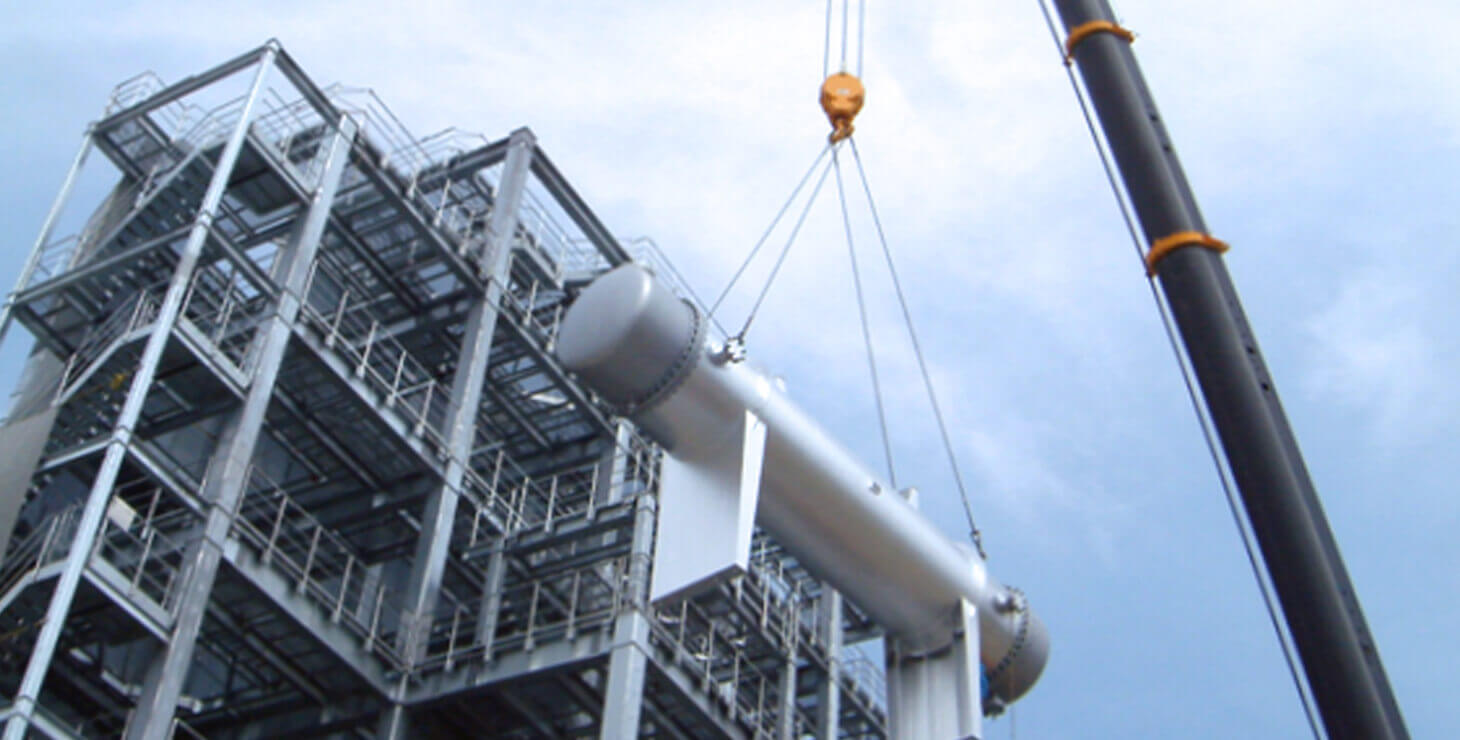
日本化学機械製造株式会社は、化学機器を自社工場にて製造できるプラントエンジニアリング企業です。
自社工場は、高圧ガス設備、圧力容器、また特殊材(耐食材料)の製作も可能で、材料手配から納入まで一括管理を行っています。プラントは様々な装置、機器類の組み合わせで構成されており、エンジニアリングには多くの知識と経験が必要とされます。
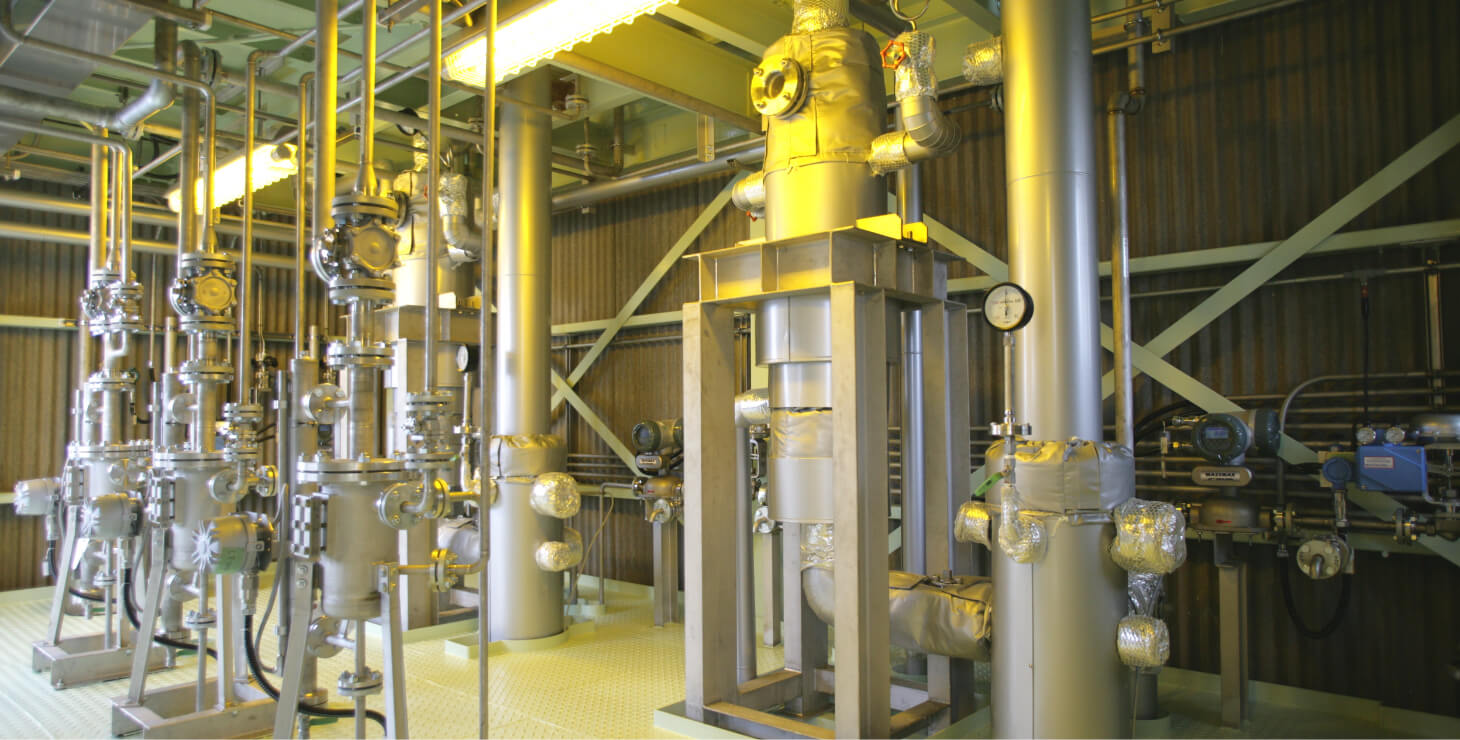
また、時代背景?外部環境の変化に伴いプラントに対するお客様のニーズも多種多様に変化しています。 設備の抱える様々な問題の解決、省エネルギー、環境対策、生産効率、品質向上、新製品生産のプロセス構築?設備計画の具現化によりお客様の事業価値向上の一助となるべく、最新の技術の開発、活用に努めております。 常にお客様の立場になり、安全で効率的な設備の構築を念頭に取り組んでおります。
-
THREE:[See larger version]
経験と実績をもとに、お客様のニーズに応じた最適な仕様?システムを構築、ご提案いたします。
-
THREE:
工場建屋、事務所棟、倉庫、試験棟などの建設も一括してご依頼いただけます。
-
THREE:CHAPTER XVII. REIGN OF GEORGE III. (continued).
環境に配慮し、コストメリットを勘案した、省エネルギーで、省スペースな設備をご提案いたします。
-
THREE:Munster 2,396,161 3,777,103 1,013,826 671,554
高圧ガス設備、圧力容器の製造資格を持った自社工場での製作により、品質、納期を管理しております。
-
THREE:During this brilliant campaign in Italy, Moreau, in Germany, had beaten General Kray in several engagements, advanced to Ulm, and there, crossing the Danube, had overrun a great part of Bavaria, and had made himself master of Munich and menaced Vienna. On hearing of the armistice in Italy, the Emperor demanded one for Austria, to continue till September; and Buonaparte, seeing that the Czar Paul had ceased to support Austria, recommended the Emperor to make peace with[478] France. The Emperor required that Britain should be included in it. But Napoleon demanded a separate negotiation, which Austria was afraid to grant. No sooner was this answer received in Paris than Buonaparte gave the word for renewed and vigorous action, both in Italy and Germany. Moreau advanced by Salzburg towards Vienna, whilst Brune drove the Austrians from the Mincio, and over the Adige and the Brenta to the very vicinity of Venice, whilst Macdonald occupied the passes of the Tyrol, ready to march to the support of the army either in Italy or Germany. The Archduke John met Moreau near Haag, and for a moment worsted him; but on the 2nd of December the two armies came to a general engagement at Hohenlinden, between the rivers Iser and Inn, in which the Austrians were routed, with a loss of ten thousand men. Moreau advanced and occupied Salzburg, and trembling for the safety of Vienna itself, the Emperor hastened to make peace. An armistice was signed on the 25th of December, and the treaty was concluded at Lun¨¦ville on the 9th of February, 1801. By this treaty all the conditions of the Treaty of Campo Formio were renewed, and the frontier of the Rhine was again ceded to France.
コストを積算し、見積価格をご提示します。回収期間法などの設備投資の経済性計算をお客様とご一緒にシミュレーションすることも可能です。
-
THREE:Meanwhile, Buonaparte was preparing to descend like an avalanche on this absurdly inflated nation. To set himself at ease with the North, whilst thus engaged in the Peninsula, he deemed it first necessary, however, to have an interview with the Emperor of Russia in Germany. The spirit of the Germans was again rising; and notwithstanding the spies and troops of Buonaparte, his paid literati¡ªlike Johannes Müller,¡ªand his paid princes¡ªlike those of the Rhenish Confederation, Bavaria, Baden, and Würtemberg,¡ªthe Germans were beginning to blush at their humiliation, and to lament the causes of it, their effeminacy, and their division into so many States, with all the consequent prejudices and intestine feuds. Prussia, which had suffered so severely for its selfish policy, and had been so cut down in territory and insulted in its honour by Napoleon, began to cherish the hope of yet redeeming itself, by a more manly spirit and a more cordial co-operation with the rest of Germany. In this work of regeneration¡ªwhich is sure to take place sooner or later, when nations have been well beaten and humiliated, and which then, in their renewed manhood, require no foreign aid for the accomplishment of their freedom¡ªall classes laboured. The king, under the inspiration of his patriotic Minister, Von Stein, began most essential reforms. He abolished the feudal servitude and forced labour under which the peasantry groaned; he made a thorough moral re-organisation of the army, admitting of promotion from the ranks; he allowed any man that had the money to purchase baronial estates; and he deprived the higher nobility of the exclusive right of possessing landed property, and of appointment to the higher civil and military posts. Von Stein, too, commenced the work of inspiring the mass of the people with a new soul of patriotism. He established a secret society, called the Tugend Bund, or union of Virtue, which was to unite nobles, statesmen, officers, and literati in one common confederation for the rescue of the country. Amongst those who entered the most enthusiastically were Colonel Schill, who had headed with great effect his troop of volunteer cavalry, Jahn, a professor at Berlin, and Moritz Arndt, a professor of Bonn, the author of the famous national song, "Was ist der Deutschen Vaterland?" in which he maintained that it was not Prussia, nor Austria, nor any other particular State, but all Germany, so far as the language extended. Scharnhorst, the commander of the Prussian army, though restricted to the prescribed number of troops, created a new army by continually exchanging trained soldiers for raw recruits, and secretly purchased an immense quantity of arms, so that, on emergency, a large body of men could be speedily assembled. He had also all the brass battery guns converted into field-pieces, and replaced by iron guns. But Napoleon's spies were everywhere. They discovered the existence of the Tugend Bund, and of the secret societies of the students, which they carried on under the old name of the Burschenschaft, or association of the students. Though Napoleon pretended to ridicule these movements, calling it mere ideology, he took every means to suppress them. The Minister, Von Stein, in consequence[566] of the contents of an intercepted letter, was outlawed; Scharnhorst, and Grüner, the head of the police, were dismissed from their offices; but it was all in vain¡ªthe tide of public feeling had now set in the right way. The same spirit was alive in Austria. Abuses were reformed; a more perfect discipline was introduced. John Philip von Stadion, the head of the Ministry, encouraged these measures; the views of the Archduke Charles were carried out on a far wider basis. A completely new institution, that of the Landwehr, or armed citizens, was set on foot. The Austrian armies were increased greatly. In 1807 the Hungarian Diet voted twelve thousand recruits; in 1808, eighty thousand; while eighty thousand organised soldiers, of whom thirty thousand were cavalry, constituted the armed reserve of this warlike nation. Napoleon remonstrated, and received very pacific answers, but the movement went on. Von Stein, now a refugee in Austria, fanned the flame there, and he and Count Münster, first Hanoverian Ambassador, and afterwards British Ambassador at St. Petersburg, were in constant correspondence with each other and with the Government of Great Britain.No sooner was the conquest of Scinde completed than the Governor-General began to discern another cloud looming in the distance. In the Punjab, Runjeet Singh had organised a regular[594] and well-disciplined army of 73,000 men. He died in 1839. His heir died the next year, it was supposed of poison. The next heir was killed a few days afterwards by accident. The third, who succeeded, was an effeminate prince, who left the government in the hands of his Minister, a wicked man, who, conspiring with others, caused to be murdered several members of the Royal Family. They were, in their turn, punished by having their heads cut off, and the only surviving son of Runjeet Singh, a boy only ten years of age, was proclaimed Maharajah. This was the work of the Sikh army, now virtually masters of the country. Lord Ellenborough and his Council suspected that this army, still 40,000 strong, and very brave, was unfriendly to the British, and might some day give trouble to the Indian Government¡ªpossibly invade its territories and cut off its communications. In order to guard against such contingencies, it was necessary, they thought, to take possession of Gwalior, a powerful Mahratta State in Central India. This country lay on the flank of our line of communications with Allahabad, Benares, and Calcutta. In this country also there were, fortunately for the British, a disputed succession, royal murders, civil dissensions, and military disorganisation. A boy, adopted by the queen, was proclaimed Sovereign by the chiefs, with a regency, over which the British Government extended its protecting wing. The young Sovereign died in 1843, leaving no child; but his widow, then thirteen years of age, adopted a boy of eight, who became king under another regency. The regent Nana Sahib was deposed, notwithstanding the support of the British Government. This was an offence which Lord Ellenborough would not allow to go unpunished; and besides, the disorganised army of Gwalior was said to be committing depredations along the British frontier. Here, then, in the estimation of the Governor-General, was a clear case for military intervention, to put down disorder, and secure a good position for future defence against the possible aggressions of the warlike Sikhs of the Punjab. Lord Ellenborough explained his policy to the Company, stating that the Indian Government could not descend from its high position as the paramount authority in India.
化学工場への納入実績が多く、各種法規にも精通しています。官庁申請書類の作成もサポートいたします。
-
THREE:
社内に様々なテスト装置をそろえておりますので、事前の検証も可能です。
新製品の生産プロセスの構築もご相談ください。
プラントの計画時から、設計、調達、建設、試運転、更には完成後のメンテナンスに至るまでトータルに対応いたします。当社は機器製作工場を所有しておりますので、細やかな機器設計?製作が可能です。
-
 FORE:AFFRAY AT BOSTON BETWEEN THE SOLDIERS AND ROPE-MAKERS. (See p. 201.)
工場建設、プラント新設の計画の立案には、大きな労力を要します。当社では、お客様の一助となるべく、官庁届け出の助成を行いながら、工場建設を進め、抱えておられる問題の解決に取り組んでおります。
-
 FORE:Another topic of the speech was the mental derangement of the king, which was now asserted, on the authority of the physicians, to be more hopeless; Mr. Perceval argued, therefore, the necessity of arranging the Royal Household so as to meet the necessarily increased expenditure. Resolutions were passed granting an addition of seventy thousand pounds per annum to the queen towards such augmented expenditure, and to provide further income for the Prince Regent. Two Courts were to be maintained, and the Regent was to retain his revenue as Prince of Wales. The Civil List chargeable with the additional seventy thousand pounds to the queen was vested in the Regent; and no sooner were these particulars agreed to than he sent letters to both Houses, recommending separate provision for his sisters; so that the Civil List was at once to be relieved of their maintenance and yet increased, simply on account of the charge of a poor blind and insane old man, who could only require a trusty keeper or two. The separate income agreed to for the princesses was nine thousand pounds a-year each, exclusive of the four thousand pounds a-year each already derived from the Civil List¡ªso that there was needed an annual additional sum of thirty-six thousand pounds for the four princesses, besides the sixteen thousand pounds a-year now being received by them. Some members observed that the grant to the Regent, being retrospective, removed altogether the merit of his declaration during the last Session of Parliament that, "considering the unexampled contest in which the[23] kingdom was now engaged, he would receive no addition to his income." In fact, little consideration was shown by any part of the royal family for the country under its enormous demands. It was understood that there was once more a deficiency in the Civil List, which would have to be made up.
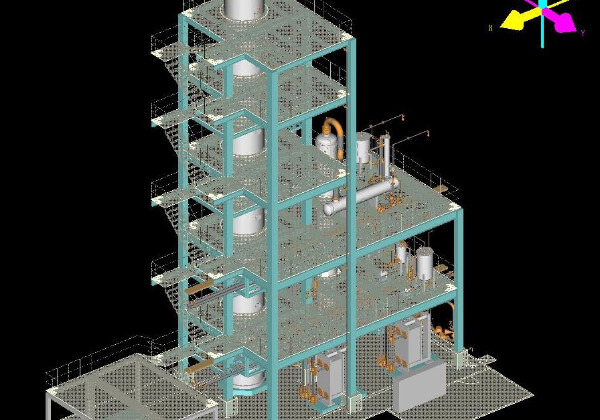
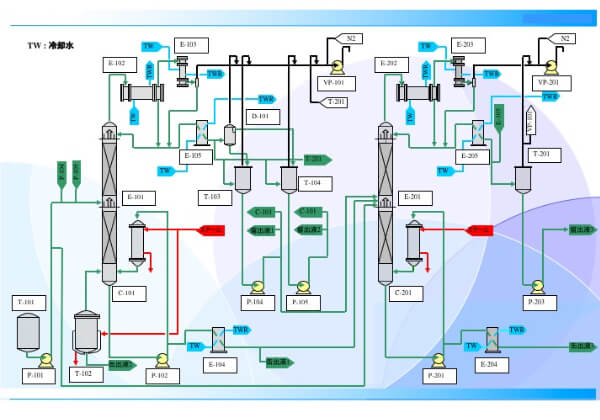
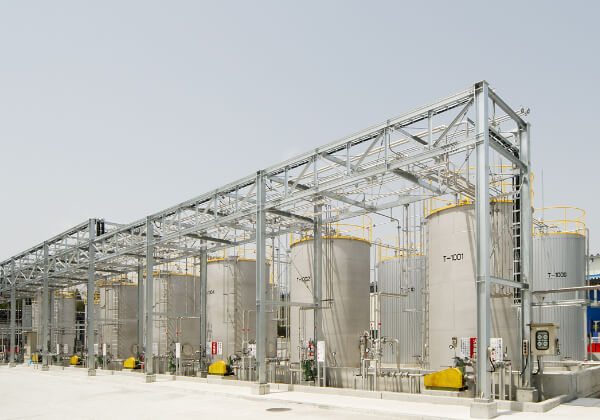
主要機器等の仕様を決定し、プラントの基本フローや配置を決定します。
-
 FORE:Sheridan marked the opening of the year 1795 by moving, on the 5th of January, for the repeal of the suspension of the Habeas Corpus Act. He showed that the very grounds on which this suspension had been based had miserably given way on the trials of Tooke, Hardy, and the rest; that the whole amount of arms and money on which the so-called "formidable" conspiracy had rested had been shown to be one pike, nine rusty muskets, and a fund of nine pounds and one bad shilling! He said that the great thing proved was the shameful conspiracy of the Government against the people, and their infamous employment of spies for that end; that eight thousand pounds had been spent on the Crown lawyers, and a hundred witnesses examined, only to expose the guilt of the Ministry. Windham defended the measures of Government, and charged the juries with ignorance and incapacity, for which Erskine severely reprimanded him. But the standing majorities of Pitt were inaccessible to argument, and the continuance of the suspension was voted by a majority of two hundred and thirty-nine against fifty-three. A like result attended the debate in the Lords, where, however, the Dukes of Norfolk and Bedford, the Marquis of Lansdowne, and the Earls of Lauderdale and Guildford strongly opposed the suspension.While the landed interest were thus showing their determination to maintain, at all hazards, the laws for preventing the importation of foreign corn, a spirit of opposition had been growing up in the large manufacturing towns of Lancashire and Yorkshire, which, though only partially shared in by the working classes, was already significant of the approaching downfall of the system of monopoly. The first use made by Manchester of its constitution as a political borough by the Reform Act was to send to Parliament Mr. Poulett Thomson and Mr. Mark Philips, two members long conspicuous in the House for the zeal and ability with which they supported the principles of Free Trade. The Manchester newspapers generally advocated the same views; and Manchester became regarded as the centre of the Anti-Corn Law agitation. No organised movement, however, had yet been attempted. A series of good harvests from 1832 to 1835 rendered it extremely difficult to arouse public attention to the injustice which the bread law invariably inflicted in less favourable circumstances. Nevertheless, the effort was made. In January, 1834, a meeting of merchants and manufacturers was held in the Manchester Exchange Committee-room, to consider how the cause of Corn Law Repeal was to be forwarded, at which some powerful speeches were delivered by the members for the borough and other speakers of influence. A committee was appointed, which timidly endeavoured to avoid the appearance of a political agitation and finally ended by doing nothing. But soon the desultory opposition to the bread tax of the Manchester Chamber of Commerce¡ªa body which had only presented one petition on the subject in seven years¡ªwas no longer sufficient to represent the feeling of that great centre of industry. Seven men united themselves in the month of October, 1838, to advocate the freedom of trade. The names of those seven members are now scarcely remembered out of Manchester, with the exception of Mr. Archibald Prentice, the historian of the League, whose newspaper, the Manchester Times, had fought with considerable talent, and with inexhaustible energy on the side of all the great reforms of this important period in our history. In that newspaper for the 13th of October a list of the Provisional Committee of a new Anti-Corn Law Association was for the first time published. It comprised thirty-seven names, chiefly of Manchester manufacturers, and ended with the modest[482] note that "Subscriptions, 5s. each, would be received by the members of that committee." Such was the simple origin of that vast movement which, a few years later, compelled the very chiefs of the landowners' party in Parliament to become the instruments for carrying out measures more sweeping than even the most ardent Free Traders had regarded as possible. But men of influence were beginning to join the movement. The list of the Provisional Committee contained at least one name which afterwards became famous¡ªthat of Mr. John Bright. Three of them became members of Parliament at a later date, and another, Mr. George Wilson, was afterwards known as the permanent chairman of the League.
設備の構成要素の詳細な仕様や配置を決定し、図面を作成します。
-
 FORE:
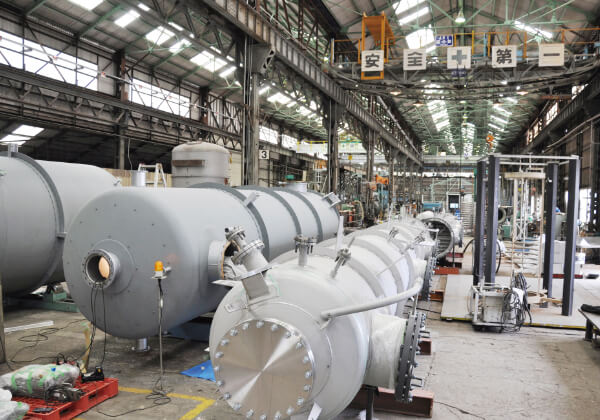
FORE:詳細設計に基づきポンプや部品類の購入品の調達先を選定し、発注します。
プラントを構成する主要な機器は特注製作が多く、材料発注、製作、各種検査、運搬まで工程、納期を管理します。 -
 FORE:Having, for the third time, expelled the French from Portugal, with the exception of the single fortress of Almeida, Wellington proceeded to reconnoitre the situation of affairs in Spain. Whilst on his march after Massena he had sent word to General Menacho to maintain possession of Badajoz, promising him early assistance. Unfortunately, Menacho was killed, and was succeeded in his command by General Imaz, who appears to have been a regular traitor. Wellington, on the 9th of March, had managed to convey to him the intelligence that Massena was in full retreat, and that he should himself very soon be able to send or bring him ample assistance. Imaz had a force of nine thousand Spaniards, and the place was strong. He was besieged by about the same number of French infantry and two thousand cavalry, yet the very next day he informed Soult of Wellington's news, and offered to capitulate. Soult must have been astonished at this proceeding, if he had not himself prepaid it in French money¡ªthe surrender of Badajoz, under the imminent approach of Wellington, being of the very highest importance. On the 11th the Spaniards were allowed to march out with what were called the "honours of war," but which, in this case, were the infamies of treachery, and Soult marched in. He then gave up the command of the garrison to Mortier, and himself marched towards Seville.Charles, accompanied by O'Sullivan, Sheridan, and other gentlemen, rode away to a seat of Lord Lovat's. The wild gallop of horsemen startled that wily old fox in his lair; and when he heard the news the Master began to tremble for his own safety. There are different accounts of his reception of the fugitive prince. One says that he was so occupied with thinking of making his own escape, that he hardly showed common courtesy to the prince and his companions, and that they parted in mutual displeasure. Another states that Lovat urged the same advice as Lord George Murray had done, still to get up into the mountains, and make a bold face, by which time might be gained for fresh reinforcements, or at least for making some terms for the unhappy people. But it is clear that Charles had now lost all spirit, if he had ever retained much after he had been forced to retreat from Derby. He and his party rode away again at ten o'clock at night, and reached Invergarry, the castle of Glengarry, about two hours before daybreak. Lord George still entertained the idea of keeping together a large body of Highlanders. He had already with him one thousand two hundred. Charles had stolen away from Invergarry to Arkaig, in Lochaber, and thence to Glenboisdale, where the messengers of Lord George found him, accompanied only by O'Sullivan, O'Neil, and Burke, his servant, who knew the country and acted as guide. All the rest of his train had shifted for themselves. Lord George entreated the prince not to quit the country, but to continue to gather a force in the mountains, and thus resist and harass their enemies till they received reinforcements; but Charles sent him word that the only chance was for himself to hasten over to France, and use all his interest to bring over an efficient force. He therefore sent Lord George a written plan of his intentions, which was not, however, to be opened till he had sailed; and he desired Lord George to request the different chiefs and their men to seek their own safety as best they might. That act terminated the Rebellion.
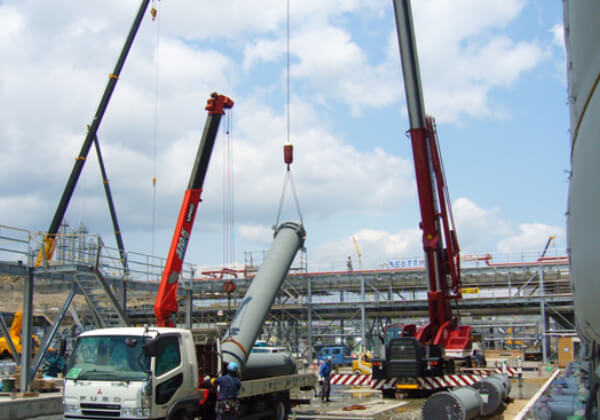
安全を第一に、管理技術者が責任を持って施工、工程、品質の管理を行いながら協力会社と連携し進めていきます。
土木?建築、機器据付、配管、電気?計装、断熱などの工事があります。 -
 FORE:
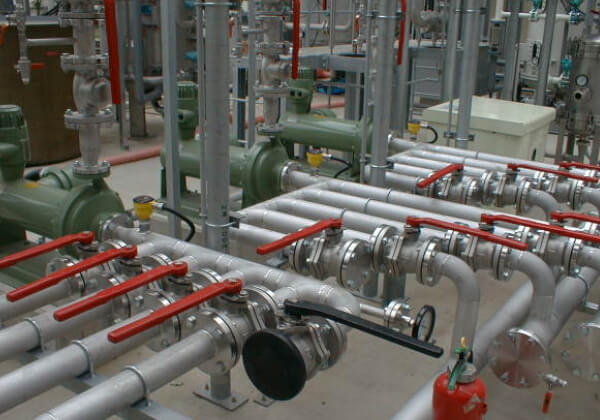
FORE:プラント完成後、性能が出るか試運転を行って確認、調整を行います。
きめ細やかな運転指導により実運転へのスムースな移行を促します。完成図書と共にお引渡しとなります。
運転?保守フェーズ
-
 FORE:"Doctor said air was best¡ªWhen the insurgents, about 8,000 strong, drew up in front of the Westgate Hotel, the principal point of attack, Frost commanded the special constables to surrender. On their refusal the word was given to fire, and a volley was discharged against the bow window of the room where the military were located, and at the same moment the rioters, with their pikes and other instruments, drove in the door and rushed into the passage. It was a critical moment, but the mayor and the magistrates were equal to the emergency. The Riot Act having been read by the mayor amidst a shower of bullets, the soldiers charged their muskets, the shutters were opened, and the fighting began. A shower of slugs immediately poured in from the street, which wounded Mr. Philips and several other persons. But the soldiers opened a raking discharge upon the crowd without, and after a few rounds, by which a great many persons fell dead on the spot, the assailants broke and fled in all directions. Frost, Williams, and Jones were tried by a special commission at Monmouth, and found guilty of high treason. Sentence of death was pronounced upon them on the 16th of January, 1840, but on the 1st of February the sentence was commuted to transportation for life. A free pardon was granted to them on the 3rd of May, 1856, and they returned to England in the September following. Mayor Philips was knighted for his gallantry.
プラント、機器の安全と安定稼働のために、定期的なメンテナンスをお薦めいたします。
-
 FORE:Yet, during this winter, while Massena's army was in a constant state of semi-starvation, badly clothed and badly lodged, and thus wasting away by sickness and desertion, that of Wellington increased in numbers, in physical condition, and in discipline. Whilst Massena's army, originally seventy-one thousand men, was ere long reduced by the battle of Busaco and the miserable quarters in the wet country near Torres Vedras to fifty-five thousand, the forces of Wellington had been augmented, by reinforcements from England, and by the addition of Portuguese and Spanish troops, to fifty-eight thousand. When Massena retreated to Santarem, Wellington followed him to Cartaxo,[607] and there fixed his headquarters, and ordered General Hill to post his division opposite to Santarem, so as to check the enemy's foraging parties in that direction. At the same time, Colonel Trant, who had surprised the French rear as Massena's army was leaving Coimbra on his march after Wellington to Torres Vedras, and had secured the sick and wounded in the hospitals there to the amount of five thousand men, and who retained possession of Coimbra, now joined Sir Robert Wilson and Colonel Millar, who commanded the Portuguese militia, and their united force appeared in Massena's rear, cutting off his communication with the north and also with the Spanish frontier.
生産量を減らすことなく、生産能力を増強するなど、お客様のご要望にお応えできるソリューションをご提案いたします。
お客様のプロセスノウハウと当社の固有技術の融合によって最適化、効率化、さらには環境に優しい設備を実現をいたします。海外現地法人(タイ、ベトナム)におきましても同等のエンジニアリングが提供できるように、本社の技術者と連携し管理いたしております。
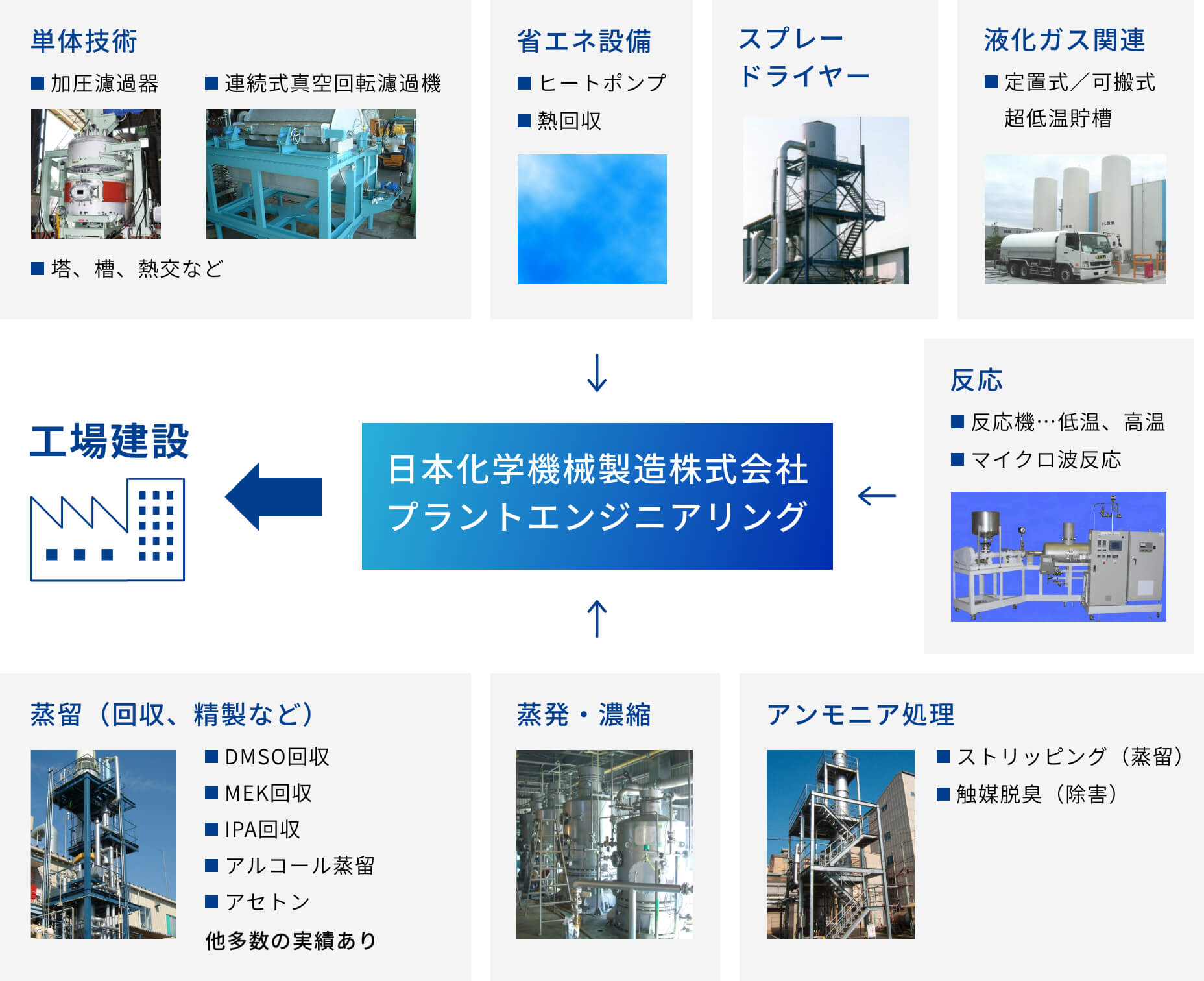
※これ以外にも様々な単位操作装置、単体機器製作ができます。
| 業種?分野 | プラント?設備名称 | 構成プロセス | 付帯設備?工事施工 |
|---|---|---|---|
| ファインケミカル | IT関連化学品プラント | 反応プロセス ろ過分離プロセス 乾燥プロセス |
クリーンルーム、充填、タンクヤード、 ユーティリティ、消火?防火設備、 土木?建築、計器?計装工事、 電気工事 |
| 食品工業 | 澱粉工場 | 反応プロセス 分離プロセス 精製プロセス 脱水?乾燥プロセス |
タンクヤード、ユーティリティ、 消火?防火設備、土木?建築、 計器?計装工事、電気工事、 原料受入?貯蔵設備、計量?包装設備 |
| 化学工業 | 合成樹脂工場 > | 反応プロセス 蒸留プロセス 濾過分離プロセス 乾燥プロセス |
タンクヤード、ユーティリティ、 供給設備、充填、自動倉庫、 焼却設備、出荷設備 |
| 食品工業 | 糖化工場 > (異性化糖類製造設備) |
液化?糖化プロセス 濃縮プロセス 濾過?精製プロセス |
タンクヤード、ユーティリティ、 土木?建築、計器?計装工事、 電気工事 |
| 環境?リサイクル | 溶剤回収プラント | 濃縮?調整プロセス 蒸留プロセス |
タンクヤード、計量設備、 ユーティリティ、消火?防火設備、 計器?計装工事、電気工事、 原料受入?貯蔵?出荷設備 |
| 無機化学工業 | 触媒製造プラント (自動車用) |
調合プロセス コーティングプロセス 焼成プロセス |
ロボット搬送システム、 原料調整?供給装置 |
| 無機化学工業 | 二次電池用原料 精製プラント |
調整プロセス 反応プロセス 分離?濃縮プロセス 蒸留プロセス |
タンクヤード、ユーティリティ、 土木?建築、空調設備、集塵?局所排気、 計器?計装工事、 電気工事、貯蔵設備、計量?包装設備 |
| 新エネルギー | バイオエタノール 大型実証モデルプラント > |
蒸留プロセス 脱水プロセス |
計器?計装工事、電気工事 |
| 無機化学工業 | 水素回収設備 | 水素回収プロセス | タンクヤード、冷却システム、 計器?計装工事 |